

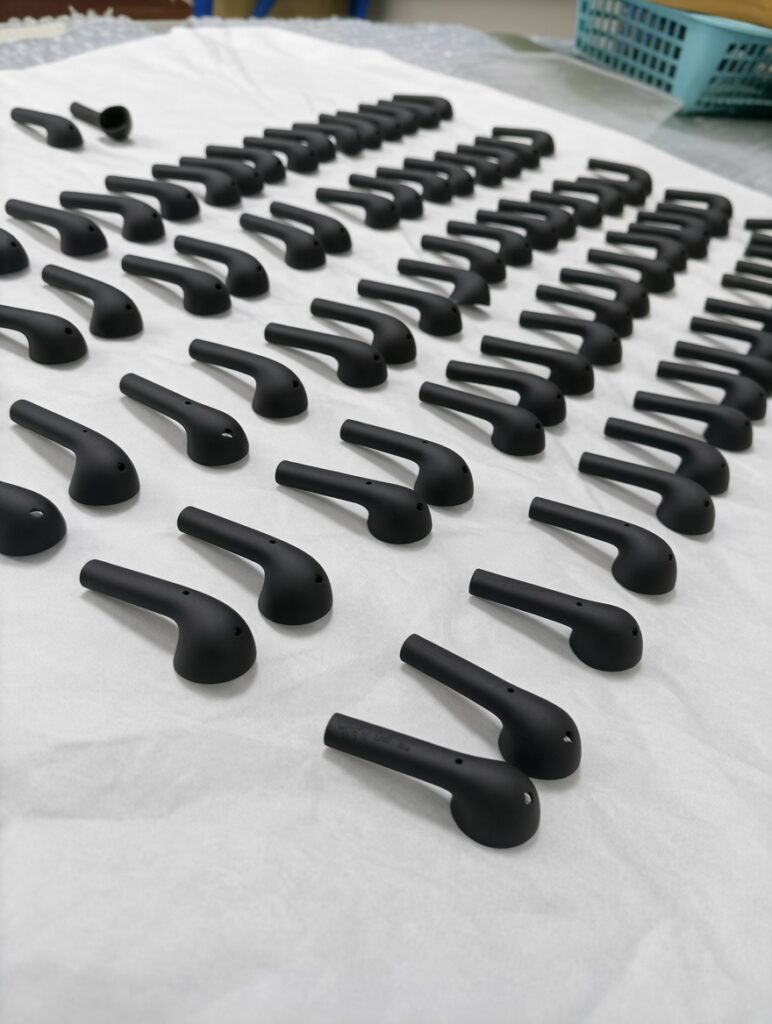
We offer a wide range of urethane materials for vacuum casting, urethane casting, rapid prototyping and low-volume production. Our polyurethane materials can simulate the performance and appearance of common plastics such as ABS, PC/ABS, PP, PE, PMMA and rubber.
Different urethane grades are available with a wide range of tensile strength, flexural modulus, elongation, hardness, heat resistance and impact resistance. We can also provide rigid, flexible, rubber-like, transparent and translucent urethane materials in different colors and surface finishes.
Urethane parts can be customized with painting, texturing, polishing, printing, inserts and other secondary finishing processes to meet functional testing, visual prototypes and low-volume production requirements.
Urethane Material Selection Guide
| Material Simulated | Representative Grade | Tensile Strength MPa | Flexural Modulus MPa | Elongation | Hardness | Typical Use Environment |
|---|---|---|---|---|---|---|
| ABS | PU8150 | 74 | 1830 | 16% | 80–85D | General structural parts, housings |
| ABS | UP4280 | 85 | 2100 | 14% | 81D | High-strength prototypes |
| ABS | PU8260 | 69 | 2260 | 15% | 80–85D | Functional prototypes, enclosures |
| ABS | PX330 | — | 3400 | 3% | 87D | Rigid structural components |
| PC/ABS | PX223HT | 60 | 2300 | 11% | 80D | Automotive and electronic housings |
| HIPS | PX100 | 40 | 1500 | 20% | 74D | Consumer products and housings |
| PP/PE | UP5690 | 25–35 | 600–1300 | 50–90% | 75–83D | Flexible structural parts |
| Filled ABS/PC | PX527 | 70 | 2600 | 13% | 82D | High-strength functional prototypes |
| PC/PMMA | PX522HT | 75 | 2100 | 9% | 87D | Transparent covers and optical prototypes |
| PC/PMMA | PX521HT | 75 | 2100 | 9% | 87D | Transparent prototypes |
| Rubber-like PU | PU8400 | 1.5–18 | — | 200–490% | 20–90A | Seals, gaskets, flexible parts |
| Transparent PU Elastomer | T0387 | 1–4 | — | 260–300% | 30–80A | Transparent flexible components |
Urethane Casting Processing Parameters
| Material Type | Typical Mixing Ratio | Pot Life at 25°C | Typical Shrinkage | Typical Casting Condition |
|---|---|---|---|---|
| Rigid ABS-like PU | 100A / 200B | 5–6 min | 0.25–0.30% | Vacuum casting |
| PC/ABS-like PU | 100A / 80B | ~7 min | ~0.4% | Vacuum casting |
| HIPS-like PU | 100A / 100B | ~15 min | ~0.4% | Vacuum casting |
| PP/PE-like PU | 100A / 80B | ~7 min | ~0.4% | Vacuum casting |
| Filled ABS/PC PU | 100A / 55B | 9–11 min | Grade-dependent | Vacuum casting |
| Flexible PU | Grade-dependent | 5–6 min | 0.4–0.6% | Vacuum casting |
| Transparent PU Elastomer | Grade-dependent | ~5.5 min | Grade-dependent | Vacuum casting |
Urethane Material Types
Rigid Urethane
Rigid polyurethane is commonly selected when the prototype needs to simulate ABS, PC/ABS, HIPS or other rigid thermoplastics. It provides good dimensional stability, strength and surface quality for functional and visual prototypes.
Flexible Urethane
Flexible urethane is available in different Shore hardness levels, typically from Shore A 20 to Shore A 90. It is suitable for seals, gaskets, grips, covers, wheels and other flexible components.
Transparent Urethane
Transparent polyurethane can be used for clear housings, lenses, light guides, covers and optical prototypes. Depending on the grade and finishing process, parts can be supplied transparent, translucent or polished.
High-Temperature Urethane
High-temperature urethane grades are available for prototypes that require improved thermal resistance compared with standard casting polyurethane. The actual temperature capability depends on the specific resin grade and exposure time.
Urethane Casting Process
The typical urethane casting process includes:
Master Pattern → Silicone Mold → Mold Preparation → Resin Mixing → Vacuum Degassing → Vacuum Casting → Curing → Demolding → Finishing → Inspection
Vacuum casting is particularly suitable for rapid prototypes, bridge production and low-volume manufacturing, especially when injection molding tooling would be too expensive or time-consuming.
How to Select Urethane Material
The appropriate urethane grade depends mainly on:
- Material simulation: ABS, PC/ABS, PP, PE, PMMA or rubber
- Hardness: Shore A or Shore D
- Mechanical strength: tensile and flexural requirements
- Elongation: required flexibility and impact resistance
- Operating temperature: ambient or elevated temperature
- Chemical exposure: oils, solvents, water and other chemicals
- Appearance: opaque, translucent or transparent
- Production volume: prototype or low-volume production
- Surface finish: texture, paint, polish or coating
Note: Mixing ratios, pot life, curing conditions, shrinkage and mechanical properties vary by resin system and supplier. The specific manufacturer’s technical data sheet should be used for final material selection and processing parameters.
Urethane Casting Applications
Urethane casting is commonly used for:
- Functional prototypes
- Automotive prototypes
- Electronic housings
- Medical device prototypes
- Consumer product prototypes
- Enclosures and covers
- Seals and gaskets
- Soft-touch components
- Transparent prototypes
- Low-volume production
- Bridge production before injection molding
 wade@axiprecision.com
 +8613686195573