

Copper and copper alloys are widely used in CNC machining, electrical components, heat exchangers, automotive parts, connectors, valves, bearings and industrial equipment. Different grades offer different combinations of electrical conductivity, thermal conductivity, strength, machinability, wear resistance and corrosion resistance.
We provide a wide range of copper and copper alloy materials for precision CNC machining and custom manufacturing, including pure copper, brass, bronze, beryllium copper and copper-nickel alloys.
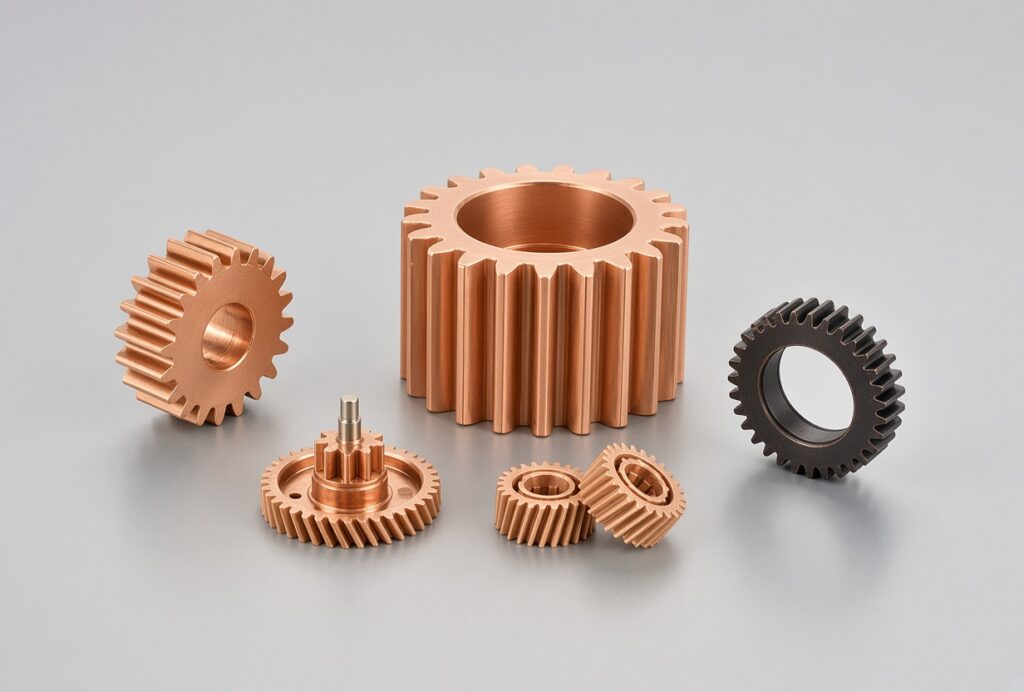
Common Copper & Copper Alloy Grades
| Grade | Material | Key Properties | Typical Applications |
|---|---|---|---|
| C10100 | Oxygen-Free Copper | Excellent electrical & thermal conductivity | Electrical, semiconductor |
| C11000 | Pure Copper | Excellent conductivity, ductility | Busbars, terminals, heat exchangers |
| C12200 | DHP Copper | Good conductivity, formability | Tubes, HVAC, heat exchangers |
| C14500 | Tellurium Copper | Excellent machinability, good conductivity | CNC parts, terminals, electrodes |
| C17200 | Beryllium Copper | Very high strength, hardness, fatigue resistance | Springs, connectors, contacts |
| C26000 | Cartridge Brass | Excellent formability and corrosion resistance | Hardware, automotive parts |
| C36000 | Free-Cutting Brass | Excellent machinability | CNC parts, fittings, valves |
| C51000 | Phosphor Bronze | Good strength, wear and fatigue resistance | Springs, bushings, contacts |
| C93200 | Bearing Bronze | Good wear resistance and load capacity | Bearings, bushings, gears |
| C95400 | Aluminum Bronze | High strength, wear and corrosion resistance | Bearings, valves, marine parts |
| C71500 | Copper-Nickel | Excellent seawater corrosion resistance | Marine piping, heat exchangers |
Material Selection Guide
| Requirement | Recommended Grades |
|---|---|
| High electrical conductivity | C10100 / C11000 |
| High thermal conductivity | C10100 / C11000 / C12200 |
| CNC machining | C14500 / C36000 |
| Electrical contacts | C11000 / C14500 / C17200 |
| Springs | C17200 / C51000 |
| Bearings & bushings | C93200 / C95400 |
| High wear resistance | C17200 / C93200 / C95400 |
| Marine environment | C71500 / C95400 |
| High strength | C17200 / C95400 |
| Good formability | C11000 / C12200 / C26000 |
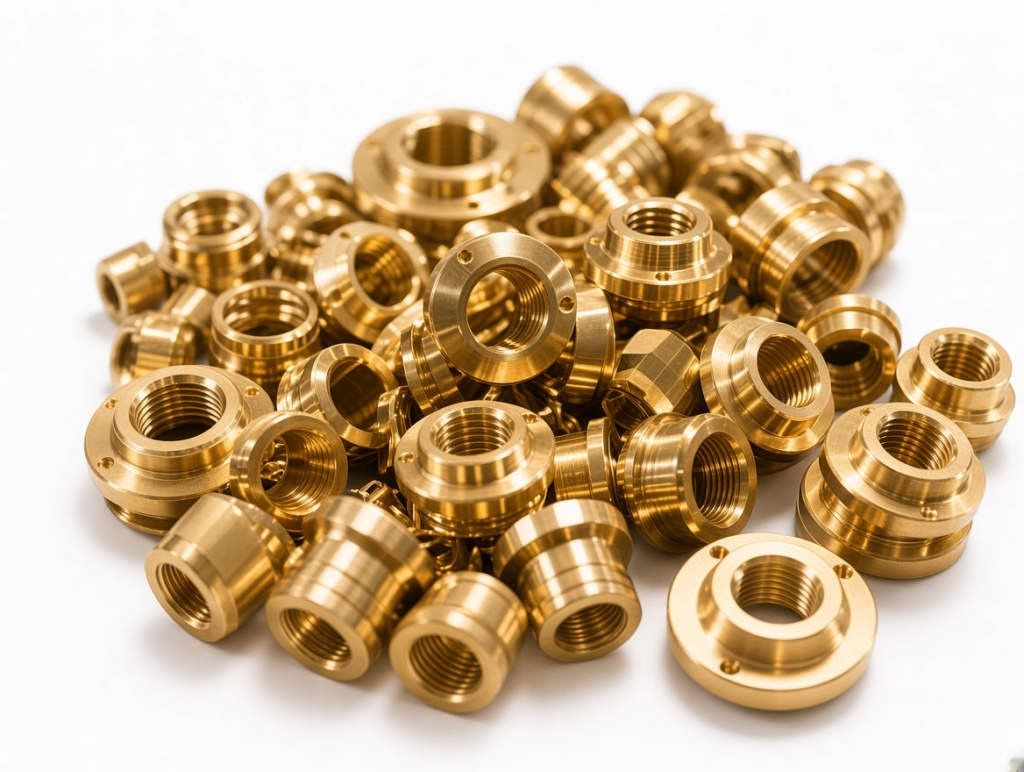
Common Failure Factors
- Corrosion: pitting, surface degradation and material loss
- Galvanic corrosion: corrosion caused by contact with dissimilar metals
- High temperature: softening and loss of strength
- Fatigue: cracking under repeated loading
- Wear: dimensional loss in bearings and sliding parts
- Chemical exposure: corrosion or material degradation
- Excessive loading: deformation or cracking
- Improper machining: dimensional errors or poor surface finish
Design Considerations
When designing copper components, consider:
- Electrical and thermal conductivity
- Mechanical strength and hardness
- Operating temperature
- Corrosion and chemical exposure
- Wear and friction
- Thermal expansion
- Machinability and surface finish
- Joining, plating or coating requirements
For CNC machining, pure copper such as C11000 provides excellent conductivity but can be more difficult to machine. C14500 tellurium copper and C36000 free-cutting brass are often better choices when machinability is a priority.
Actual properties depend on the specific grade, temper, product form and applicable standard. Final material selection should be confirmed according to project requirements and the manufacturer’s technical data.
 wade@axiprecision.com
 +8613686195573