

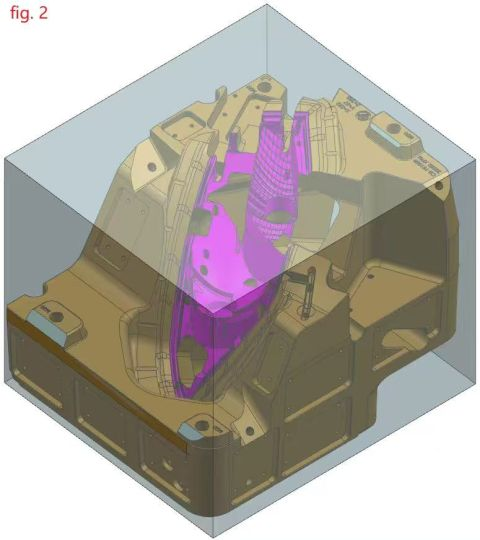
As shown in the 3D model, this automotive lighting component features a large height variation, deep cavity structure, and complex part geometry, which creates challenges in mold insert design and machining process optimization.
For this type of high-complexity mold insert, many traditional mold manufacturers typically purchase two separate blocks of mold steel for the cavity and core inserts, then machine each insert independently through a conventional CNC machining process.
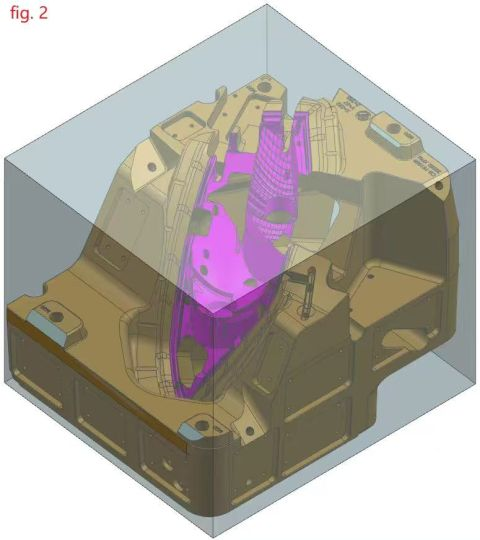
Although this approach is commonly adopted, it often results in unnecessary manufacturing costs due to:
1. Excessive mold steel consumption caused by low material utilization efficiency;
2. Increased machining allowance and longer material removal time
Extended CNC machining cycles due to larger stock removal requirements;
3. Higher cutting tool consumption caused by aggressive rough machining operations
4. Increased machine loading time and equipment utilization cost
5. Additional labor input for machining and process handling
6. Engineering Solution: Mold Steel Utilization Optimization Before CNC Machining
Experienced mold manufacturers conduct a comprehensive DFM (Design for Manufacturing) analysis before starting the machining process.
Instead of purchasing two individual steel blocks and machining them separately, the optimized approach is to evaluate the mold insert layout and maximize material utilization by combining the two inserts into a single larger steel block during the initial material preparation stage.
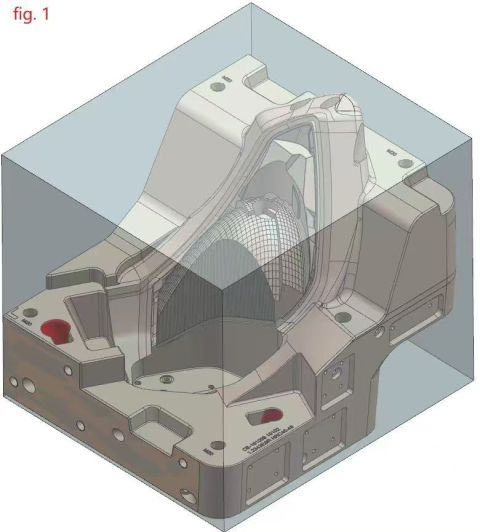
This optimized process provides significant improvements in:
👍 Mold steel utilization efficiency
👍 CNC machining efficiency and cycle time reduction
👍 Cutting tool life and machining stability
👍 Overall manufacturing productivity and cost efficiency
👍 Cost Reduction Results
By implementing this mold material optimization strategy:
😊 Mold steel consumption can be reduced by approximately 40%
😊 CNC machining time, cutting tool consumption, and manufacturing resources can be significantly reduced
😊 Overall tooling manufacturing cost can be reduced by approximately 50% in this specific application
😊 This case demonstrates that effective tooling cost reduction is not achieved simply by negotiating lower prices, but through engineering-driven optimization of material selection, machining strategy, and manufacturing processes.
 wade@axiprecision.com
 +8613686195573