

Steel is one of the most widely used engineering materials for CNC machining, sheet metal fabrication, injection molds, die casting dies, tooling, shafts, gears, and high-strength mechanical components.
Different steel grades provide different combinations of strength, hardness, toughness, wear resistance, corrosion resistance, machinability, heat resistance, and dimensional stability. Material selection should consider the application, operating environment, required service life, heat treatment, machining process, and surface treatment.
Material note: Mechanical properties depend strongly on grade, product form, thickness, heat-treatment condition, and applicable standard. Actual values should be verified against the material supplier’s TDS or relevant ASTM/EN specification.
Common Steel Grades
| Grade | Steel Type | Key Properties | Typical Applications |
|---|---|---|---|
| AISI 1018 | Low Carbon Steel | Good machinability, weldability and ductility | CNC parts, shafts, pins, brackets |
| AISI 1045 | Medium Carbon Steel | Good strength, hardness and wear resistance | Shafts, gears, pins, bolts |
| AISI 4130 | Alloy Steel | High strength, toughness and weldability | Aerospace, automotive, shafts |
| AISI 4140 | Alloy Steel | High strength, toughness and fatigue resistance | Gears, shafts, axles, machine parts |
| AISI 4340 | Alloy Steel | Very high strength, toughness and hardenability | Aerospace, gears, shafts, heavy-duty parts |
| AISI 8620 | Carburizing Alloy Steel | Excellent case-hardening and wear resistance | Gears, pinions, shafts, bushings |
| AISI A2 | Cold Work Tool Steel | High wear resistance and dimensional stability | Dies, punches, forming tools |
| AISI D2 | Cold Work Tool Steel | Excellent wear resistance and high hardness | Stamping dies, cutting tools, punches |
| AISI S7 | Shock-Resistant Tool Steel | Excellent impact toughness | Punches, dies, shear tools |
| AISI H13 | Hot Work Tool Steel | Excellent thermal fatigue, toughness and heat resistance | Injection molds, die casting dies, extrusion dies |
| AISI H11 | Hot Work Tool Steel | High toughness and thermal fatigue resistance | Die casting and hot-forming dies |
| AISI P20 | Pre-Hardened Mold Steel | Good machinability, polishability and toughness | Plastic injection molds, mold bases |
| P20+Ni | Pre-Hardened Mold Steel | Good toughness, polishability and dimensional stability | Large plastic injection molds |
| AISI 420 | Martensitic Stainless Steel | High hardness, wear resistance and corrosion resistance | Plastic molds, medical tools, blades |
| AISI 440C | Martensitic Stainless Steel | Very high hardness and wear resistance | Bearings, precision tools, blades |
| AISI 303 | Austenitic Stainless Steel | Excellent machinability | CNC turned parts, fittings, fasteners |
| AISI 304 | Austenitic Stainless Steel | Excellent corrosion resistance and formability | Sheet metal, enclosures, food and medical equipment |
| AISI 316 / 316L | Austenitic Stainless Steel | Excellent corrosion and chemical resistance | Marine, chemical and medical equipment |
| 17-4 PH / UNS S17400 | PH Stainless Steel | High strength, hardness and corrosion resistance | Aerospace, valves, shafts, mechanical parts |
| 15-5 PH / UNS S15500 | PH Stainless Steel | High strength, toughness and corrosion resistance | Aerospace, marine and precision components |
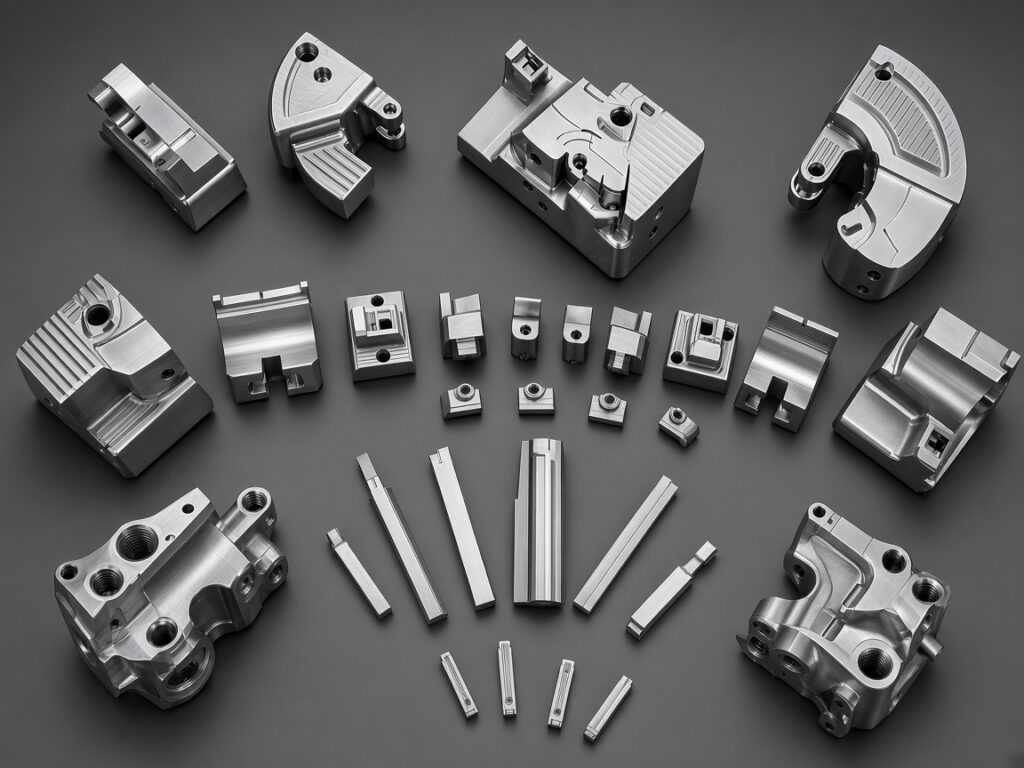
Plastic Injection Mold Steels
For injection molding, steel selection depends on mold life, resin abrasiveness, corrosion, surface finish, polishing requirements, and production volume.
| European Grade | Common US / International Equivalent | Key Properties | Typical Applications |
|---|---|---|---|
| 1.2311 | AISI P20 | Good machinability, toughness and polishability | General injection molds |
| 1.2312 | AISI P20 Modified | Improved machinability, pre-hardened | Mold bases, general tooling |
| 1.2738 | P20 + Ni | Better toughness and dimensional uniformity | Large injection molds |
| 1.2083 | AISI 420 Modified | Corrosion resistance, polishability | Optical and medical molds |
| 1.2085 | Corrosion-Resistant Mold Steel | Corrosion resistance, pre-hardened | Mold components and bases |
| 1.2316 | AISI 420-type | Excellent corrosion resistance and polishability | Medical, optical and PVC molds |
| 1.2343 | AISI H11 | High toughness and thermal fatigue resistance | High-temperature tooling |
| 1.2344 | AISI H13 | Excellent hot strength, toughness and thermal fatigue resistance | Injection molds, die casting dies |
| 1.2344 ESR | H13 ESR | Improved cleanliness and polishability | High-quality molds and tooling |
| 1.2767 | AISI 6F7-type | High toughness and polishability | Large molds, compression tooling |
S136 Mold Steel
S136 is a commonly used mold steel designation in Asian mold manufacturing, but it is not an original AISI designation. For a Western-facing website, it is better to identify it by its European equivalent:
S136 ≈ EN/DIN 1.2083 / AISI 420-type stainless mold steel
It is widely used for high-polish, corrosion-resistant injection molds, especially for medical, optical, transparent and PVC applications.
Die Casting Tool Steels
Die casting dies require steels with excellent hot strength, thermal fatigue resistance, toughness, temper resistance, and resistance to heat checking.
| Grade | Common Standard | Key Properties | Typical Applications |
|---|---|---|---|
| AISI H13 / 1.2344 | ASTM / EN / DIN | Excellent hot strength, toughness and thermal fatigue resistance | Aluminum die casting dies |
| AISI H11 / 1.2343 | ASTM / EN / DIN | Higher toughness and thermal fatigue resistance | Die casting dies, hot tooling |
| AISI H10 / 1.2365 | EN / DIN | High hot strength and temper resistance | Hot forming and die casting |
| AISI H19 / 1.2714 | EN / DIN | High toughness and thermal strength | Heavy-duty hot tooling |
| AISI H13 ESR | ESR Tool Steel | High cleanliness, toughness and thermal fatigue resistance | High-performance die casting dies |
AISI H13 / EN 1.2344 is one of the most widely used choices for aluminum die casting dies because it provides a good balance of hot hardness, toughness, thermal fatigue resistance and machinability.
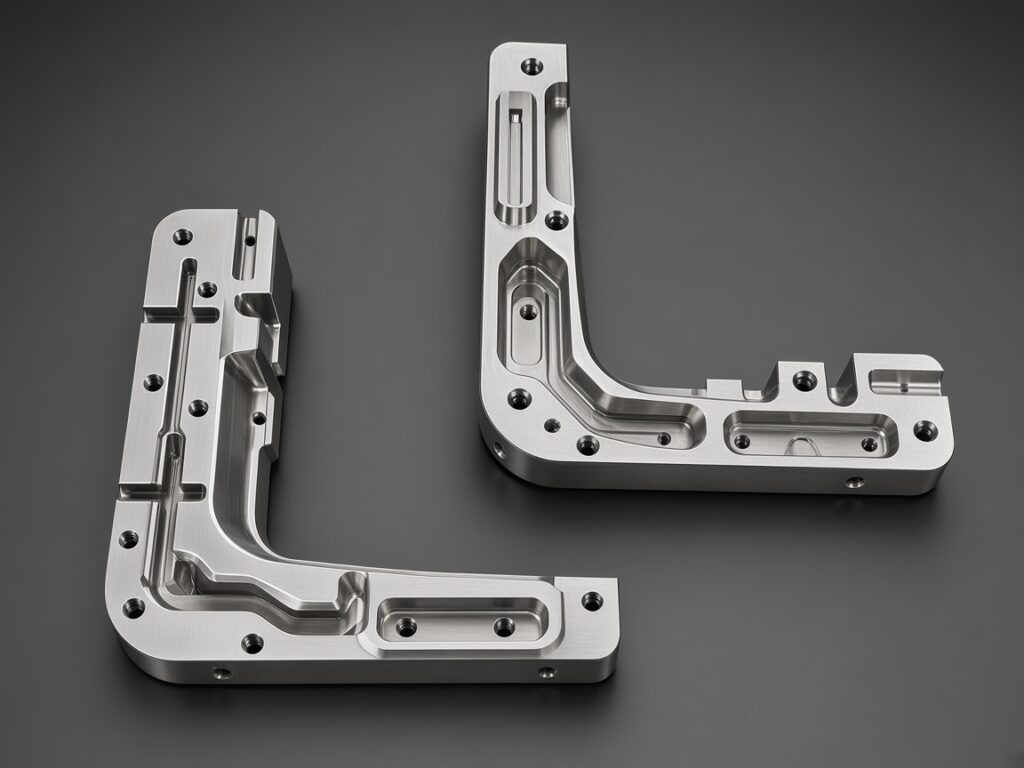
Material Selection Guide
| Requirement | Recommended Steel |
|---|---|
| General CNC machining | AISI 1018, 1045 |
| High-strength CNC parts | AISI 4140, 4340 |
| Carburized gears | AISI 8620 |
| General plastic injection molds | 1.2311 / P20 |
| Large injection molds | 1.2738 / P20+Ni |
| High-polish molds | 1.2083 / 420-type |
| Corrosion-resistant molds | 1.2083, 1.2316 |
| High-wear tooling | AISI D2 |
| High-impact tooling | AISI S7 |
| Hot injection molding | AISI H13 / 1.2344 |
| Aluminum die casting | AISI H13 / 1.2344 |
| High thermal fatigue resistance | H13 / 1.2344, H11 / 1.2343 |
| High-strength stainless parts | 17-4 PH |
| Corrosion-resistant CNC parts | 304, 316L |
| High-hardness stainless parts | 420, 440C |
Common Steel Failure Factors
- Excessive mechanical loading
- Fatigue and cyclic stress
- Wear and abrasion
- Corrosion and oxidation
- Thermal fatigue and heat checking
- Improper heat treatment
- Insufficient hardness
- Excessive residual stress
- Welding-induced cracking or distortion
- Stress concentration
- Poor cooling or thermal management in molds and dies
Steel Design Considerations
When designing steel components or tooling, consider:
- Material grade and heat-treatment condition
- Required hardness and toughness
- Operating temperature
- Wear and corrosion environment
- Machinability and cutting conditions
- Heat-treatment distortion
- Wall thickness and structural rigidity
- Fillets and stress concentration
- Cooling-channel layout for molds and dies
- Surface finish and polishing requirements
- Dimensional tolerances and mold shrinkage
- Surface treatment such as nitriding, carburizing, plating or coating
Common Steel Surface Treatments
Common treatments include quenching and tempering, carburizing, nitriding, black oxide, zinc plating, electroless nickel plating, PVD coating, passivation, polishing, and shot/bead blasting.
SEO Keywords
steel materials, steel grades, steel material selection, carbon steel, alloy steel, tool steel, mold steel, injection mold steel, plastic mold steel, die casting steel, die casting mold steel, AISI H13, H13 steel, 1.2344 steel, H11 steel, 1.2343 steel, P20 steel, 1.2311 steel, 1.2312 steel, 1.2738 steel, S136 steel, 1.2083 steel, 1.2316 steel, D2 tool steel, AISI 4140, AISI 4340, AISI 8620, 303 stainless steel, 304 stainless steel, 316 stainless steel, 420 stainless steel, 440C stainless steel, 17-4 PH stainless steel, CNC steel machining, precision steel parts, injection mold manufacturing, die casting tooling
 wade@axiprecision.com
 +8613686195573