

Custom Automotive Parts From Prototype to Production
The automotive aftermarket is all about making vehicles better, different, and more capable.
Whether it is a performance upgrade, an off-road accessory, a restomod project, a custom interior component, or a completely new aftermarket product, the demand for custom automotive parts continues to grow.
But developing aftermarket parts is not always easy.
You may have a great product idea but only a CAD model to start with. You may need 20 prototypes before launching a new product. You may need 500 units for an initial market test instead of 50,000 pieces. Or you may need several different components made from aluminum, steel, stainless steel, and engineering plastics.
Finding a supplier that can handle all of these requirements can be difficult.
We provide CNC machining, injection molding, rapid prototyping, rapid tooling, sheet metal fabrication, die casting, 3D printing, urethane casting, and assembly for automotive aftermarket and custom parts.
Our goal is simple:
Help you turn automotive product ideas into real, functional, production-ready parts.
Custom Parts for the Automotive Aftermarket
Aftermarket products are different from traditional OEM components.
You are often developing something new rather than simply reproducing an existing part.
That means flexibility matters.
A typical aftermarket project may involve:
- Custom brackets
- Mounting plates
- Aluminum components
- Performance parts
- Engine bay components
- Suspension components
- Interior parts
- Exterior accessories
- Off-road accessories
- 4×4 components
- Racing components
- Custom enclosures
- Replacement parts
- Restomod components
Some projects may require a single prototype.
Others may require several hundred or several thousand parts.
The manufacturing process needs to change with the project.
That is where we can help.
CNC Machining for Custom Automotive Parts
CNC machining is widely used for custom automotive parts because it provides excellent dimensional accuracy, material flexibility, and fast development.
It is particularly useful for aluminum, stainless steel, steel, brass, engineering plastics, and other materials.
Typical applications include:
- Aluminum brackets
- Mounting components
- Engine components
- Suspension components
- Adapter plates
- Spacers
- Housings
- Covers
- Knobs
- Interior components
- Performance parts
- Custom mechanical components
For new aftermarket products, CNC machining also provides a practical way to produce functional prototypes before investing in production tooling.
You can test the actual part on the vehicle, check fitment, verify clearances, evaluate strength, and make design changes before moving into larger production.
Automotive Prototyping Without Guesswork
A CAD model can tell you a lot.
But it cannot tell you everything.
A part may look perfect on the screen and still have problems when installed on a real vehicle.
Maybe the bracket interferes with another component.
Maybe a mounting hole needs to move a few millimeters.
Maybe the part is too heavy.
Maybe the clearance is not enough.
Maybe the surface finish does not meet the expected appearance.
These problems are much easier to fix during the prototype stage than after hundreds or thousands of parts have already been produced.
We support automotive prototyping through CNC machining, 3D printing, urethane casting, sheet metal fabrication, and other suitable manufacturing processes.
The typical development cycle is:
CAD → Prototype → Vehicle Fitment → Testing → Design Improvement → Production
This gives aftermarket brands and engineering teams a practical way to validate their products before committing to larger production quantities.
Injection Molding for Automotive Aftermarket Parts
Plastic is becoming increasingly important in automotive aftermarket products.
It can be used for interior components, exterior accessories, covers, housings, brackets, trim pieces, protective components, and many other applications.
Injection molding is ideal when you need repeatable plastic parts in larger quantities.
Typical applications include:
- Interior trim components
- Custom housings
- Switch panels
- Covers
- Brackets
- Protective parts
- Exterior accessories
- Storage components
- Electronic enclosures
- Custom plastic components
For aftermarket products, injection molding can also help reduce the unit cost when production volumes increase.
But good injection molding starts before the mold is built.
Part design needs to consider:
Wall Thickness → Draft → Ribs → Bosses → Gate Location → Ejection → Shrinkage → Warpage → Parting Line → Assembly
By considering these factors early, potential tooling problems can be identified before they become expensive problems.
Rapid Tooling for New Aftermarket Products
Not every aftermarket product needs a large production run.
A new product may first need 100, 300, or 1,000 units to test the market.
This is common for:
- New aftermarket brands
- Performance products
- Off-road accessories
- Restomod products
- Racing components
- Limited-edition products
- Product launches
- Market validation
In these situations, rapid tooling can provide a more practical solution than immediately investing in a high-volume production mold.
It allows companies to obtain real injection molded parts faster and start selling or testing products sooner.
If the product performs well in the market, production can then be scaled up.
Sheet Metal Fabrication for Automotive Parts
Sheet metal is an excellent choice for many automotive aftermarket components.
It can be used for brackets, mounting plates, skid plates, battery trays, engine bay components, frames, covers, and other structural parts.
Typical processes include:
- Laser cutting
- CNC bending
- Punching
- Welding
- Riveting
- Threading
- Surface finishing
- Assembly
Sheet metal can be especially useful for low-volume aftermarket products because it avoids the tooling investment required by some other manufacturing processes.
For a new product, this can mean:
Lower Initial Investment + Faster Prototyping + Flexible Production
Die Casting for Automotive Performance Components
When production quantities increase and a part requires a complex metal shape, die casting can become an attractive option.
Aluminum and zinc die-cast components can be used for:
- Housings
- Brackets
- Structural components
- Mounting components
- Performance components
- Heat-dissipation parts
- Decorative metal components
Die casting can provide good repeatability and production efficiency while allowing relatively complex geometries.
The right process depends on the actual product, quantity, material, tolerance, and cost target.
Low-Volume Manufacturing for Aftermarket Brands
This is one of the biggest challenges for aftermarket companies.
You may have a product that is ready to sell, but you do not know whether the market will support 50,000 units.
You may only need:
100 → 500 → 1,000 → 5,000 units
before deciding whether to scale.
This is where low-volume manufacturing becomes valuable.
We help aftermarket brands bridge the gap between prototypes and mass production.
Depending on the product, we can use:
- CNC machining
- Injection molding
- Rapid tooling
- Sheet metal fabrication
- Die casting
- 3D printing
- Urethane casting
- Assembly
This allows you to start small, test the market, and scale production when demand is proven.
One Supplier for Multiple Manufacturing Processes
An aftermarket product rarely consists of only one component.
For example, a performance product may require:
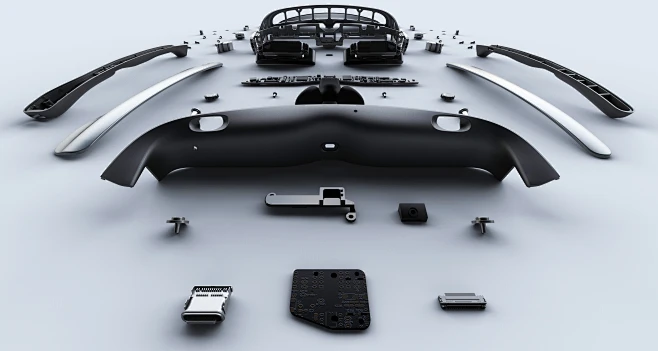
CNC machined aluminum parts + injection molded plastic components + sheet metal brackets + fasteners + surface finishing + assembly
Working with five or six different suppliers can quickly become a headache.
You have to manage different quotations, production schedules, quality standards, packaging requirements, and shipping arrangements.
By supporting multiple manufacturing processes, we can help simplify the supply chain.
Instead of managing every component separately, you can work with one manufacturing partner to coordinate multiple parts and processes.
That means:
Less Communication → Less Coordination → Fewer Delays
Engineering Support, Not Just Manufacturing
Aftermarket products often involve engineering challenges that standard catalog parts do not have.
You may need to modify an existing component.
You may need to fit a new part into a limited space.
You may need to maintain compatibility with existing vehicle components.
You may need to reduce weight without sacrificing strength.
Or you may need to reduce manufacturing cost while keeping the product competitive.
These are not simply purchasing problems.
They are engineering problems.
Our manufacturing experience allows us to look at your project from both sides:
Can we make it?
and
What is the most practical way to make it?
Sometimes the answer is changing the manufacturing process.
Sometimes it means adjusting a tolerance.
Sometimes it means changing the material.
Sometimes a small design modification can make a significant difference to cost and manufacturability.
DFM for Custom Automotive Parts
Design for Manufacturing, or DFM, is particularly important for custom automotive parts.
A design that works perfectly as a concept may not be economical or reliable to manufacture.
During the design review process, we can consider:
Material → Geometry → Tolerance → Manufacturing Process → Tooling → Surface Finish → Assembly → Cost
The earlier potential problems are identified, the easier they are to solve.
For example, changing a hole position during the prototype stage is simple.
Changing it after tooling is completed can be much more expensive.
Good DFM is not about changing your product unnecessarily.
It is about making sure the product can be manufactured reliably, repeatedly, and at a reasonable cost.
Built for Performance, Fitment, and Real-World Use
Aftermarket parts have to work in the real world.
A bracket needs to fit.
A mounting plate needs to line up.
A housing needs to protect the components inside.
A performance component needs to withstand its intended operating conditions.
And the finished product needs to look good enough for the customer who is paying for it.
That is why we consider more than just dimensions.
Depending on the project, we can support:
- Dimensional inspection
- Critical tolerance inspection
- Material verification
- Surface finish inspection
- Cosmetic inspection
- Assembly verification
- Functional testing
- First article inspection
- Production inspection
The inspection plan can be developed around the actual requirements of the product.
The goal is not to inspect everything unnecessarily.
The goal is to make sure the critical characteristics are controlled and the final part performs as expected.
Surface Finish for Aftermarket Parts
For aftermarket products, appearance can be a major part of the buying decision.
Customers may care about:
- Anodizing
- Powder coating
- Plating
- Brushing
- Polishing
- Sandblasting
- Laser engraving
- Textured surfaces
- Cosmetic consistency
A well-designed part can still look cheap if the surface finish is poor.
We can help coordinate surface finishing requirements for CNC machined, sheet metal, die-cast, and other metal components.
The result should not only be a functional part.
It should be a part that looks right on the vehicle.
From Idea to Aftermarket Product
A typical custom automotive project can move through several stages:
Product Idea
↓
CAD Design
↓
Prototype
↓
Vehicle Fitment
↓
Testing
↓
Design Optimization
↓
Rapid Tooling
↓
Low-Volume Production
↓
Production Scaling
The manufacturing method can change as the product develops.
CNC machining or 3D printing may make sense for the first prototype.
Sheet metal or CNC machining may be better for early production.
Injection molding or die casting may become more economical as volumes increase.
The goal is not to use one manufacturing process for everything.
The goal is to use the right process at the right stage.
Why Choose Us for Automotive Aftermarket & Custom Parts?
Engineering-Driven Manufacturing
We understand engineering drawings, tolerances, materials, manufacturing processes, tooling, and assembly requirements.
Multiple Manufacturing Processes
CNC machining, injection molding, rapid tooling, sheet metal fabrication, die casting, 3D printing, urethane casting, and assembly can be combined according to your project.
Fast Prototyping
Get physical parts quickly so you can test fitment, function, appearance, and performance before committing to larger production quantities.
Low-Volume Friendly
Start with smaller quantities when you are launching a new product or testing market demand.
Flexible Supply Chain
Coordinate multiple components and manufacturing processes through one manufacturing partner.
Cost-Conscious Solutions
We consider quantity, material, tolerance, tooling investment, surface finish, manufacturing process, and assembly requirements to develop a practical solution.
Practical Engineering Communication
You can send us a CAD file, drawing, BOM, or even an early-stage product concept.
We can discuss the manufacturing requirements, identify potential problems, and work toward a solution that makes sense for both the product and the budget.
Turn Your Automotive Idea Into a Real Product
The automotive aftermarket is driven by innovation.
New products, new performance solutions, new off-road accessories, and new custom parts are constantly entering the market.
But a great idea only becomes a successful aftermarket product when it can be manufactured consistently, economically, and at the right quality level.
Whether you need one prototype, 100 custom parts, or a complete low-volume production program, we can help.
From CNC machining and 3D printing to injection molding, sheet metal fabrication, rapid tooling, die casting, and assembly, we provide flexible manufacturing solutions for automotive aftermarket companies.
Have a CAD file, drawing, BOM, prototype, or simply an idea?
Send us your requirements.
We will help you evaluate the design, choose the right manufacturing process, identify potential problems, and move your product from concept to prototype to production.
You bring the automotive idea. We help turn it into a real aftermarket product.

 wade@axiprecision.com
 +8613686195573